What Is Hard Water?
Hard water contains dissolved minerals — primarily calcium and magnesium — picked up as water moves through soil and rock before reaching the tap. It's not a health or safety issue, but the minerals leave deposits inside pipes, fixtures, appliances and water heaters, and they interfere with how soap and detergent work.
Why Hard Water Matters in Utah County
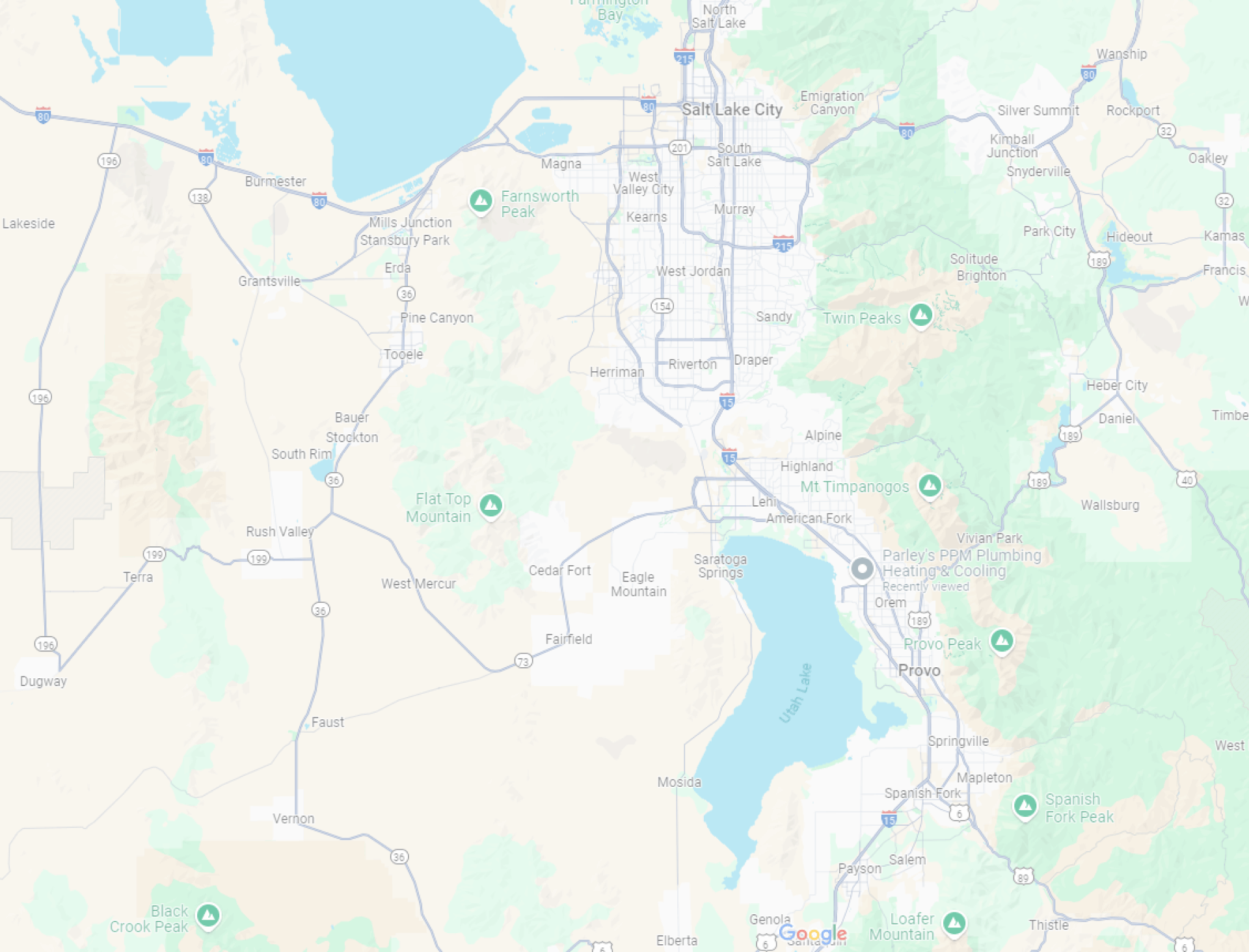
Water hardness in Utah County varies somewhat by municipality and water source, but a noticeable mineral content is common throughout the area. Over time, that mineral load accumulates inside water heaters as sediment, inside fixtures as scale, and inside pipes as a gradual buildup on interior surfaces. Homes here often go through fixtures and water heaters faster than the same homes would in a region with softer water.
What Hard Water Can Affect
Scale buildup shows up in a lot of places at once: fixture aerators and cartridges, water heater tanks (where sediment settles and reduces efficiency), tankless heat exchangers (where scale restricts flow), dishwashers and washing machines, and the visible surfaces of showers and sinks. Addressing the water itself tends to be more effective than repeatedly cleaning or replacing the things it affects.
How a Water Softener Works
A softener uses a resin bed to exchange the calcium and magnesium in your water for sodium or potassium ions, then periodically flushes the resin clean with a brine solution made from the salt or potassium you add to the unit. The result is water that no longer leaves mineral scale behind.
How We Determine the Right Softener Size
Softener sizing depends on your household's water hardness level, daily water use and number of occupants. We test your water and size the equipment to that actual usage rather than defaulting to a one-size-fits-all unit, which keeps the system from working harder — or running out of capacity — than it needs to.
Water Softener Installation
We install softeners at the point where the main water line enters your home, ahead of the water heater, so treated water reaches every fixture and appliance. Installation includes tying into your existing plumbing and setting up the drain line the unit needs for its regeneration cycle.
Water Softener Repair
A softener that isn't regenerating properly, isn't using salt, or is producing water that still feels hard usually has a specific fixable issue — a clogged injector, a worn valve, or a control head that needs to be reprogrammed. We diagnose and repair existing units rather than assuming replacement is the only option.
When to Replace an Older Softener
A softener resin bed and control valve both wear out eventually, typically after a decade or more of regular use. When a unit is old enough that replacement parts are hard to find, or when it's no longer softening effectively even after repair, replacing it usually makes more sense than continuing to service aging equipment.
Salt & Maintenance
Softeners need their salt or potassium tank refilled periodically, with frequency depending on household water use and softener size. Beyond keeping the tank filled, softeners benefit from an occasional check of the resin bed and control settings to make sure the unit is regenerating on an efficient schedule.
Water Softener vs Filtration
A softener and a filtration system solve different problems. A softener removes hardness minerals that cause scale; it does not remove contaminants, chlorine taste or sediment particles the way a filtration system does. Some households benefit from both — a softener to protect plumbing and appliances, and filtration for water taste and quality at the tap.
Water Softeners & Tankless Water Heaters
Tankless water heaters are especially sensitive to hard water because scale builds up inside their narrow heat exchanger passages, restricting flow and reducing efficiency faster than it would in a standard tank. If you're considering a tankless water heater, pairing it with a softener is one of the most effective ways to protect that investment.
If you're installing a new water heater or tankless system, install or confirm a softener at the same time rather than adding one later — it's simpler to do the plumbing once.