An air conditioner blows warm air when something prevents heat from actually being removed from the house — most commonly low refrigerant from a leak, a failed compressor, a dirty or frozen coil, restricted airflow from a clogged filter, or an electrical component like a capacitor or contactor that has failed. A technician needs to check pressures, electrical readings and airflow to identify which of these is happening in your system, since several of these causes look identical from inside the house.
Why Won't My AC Turn On?
An air conditioner that will not turn on usually points to one of a few places: a tripped breaker or blown fuse, a thermostat that is not calling for cooling, a failed capacitor or contactor at the outdoor unit, or a safety switch that has shut the system down in response to a float switch, a frozen coil or a pressure fault. Checking the thermostat and breaker takes a minute and rules out the simplest causes before a technician needs to look at the equipment itself.
Why Is My AC Freezing Up?
Ice on an air conditioner almost always comes from restricted airflow or low refrigerant. A dirty filter, closed vents, a failing blower motor or a clogged coil all reduce the airflow needed to keep the coil above freezing, and low refrigerant from a leak has the same effect. Running a frozen system longer usually makes the underlying problem worse, so it is worth shutting the system off and letting it thaw before a technician arrives.
Common AC Problems We Repair
Parley's repairs the full range of central air conditioning components: capacitors and contactors that control startup and run cycles, blower and condenser fan motors, control boards and safety switches, restricted or leaking ductwork, refrigerant circuit leaks and charge problems, evaporator and condenser coils, and condensate drains and pumps that back up or fail. Most repair visits involve one or two of these systems rather than a wholesale equipment failure.
What We Check During AC Diagnosis
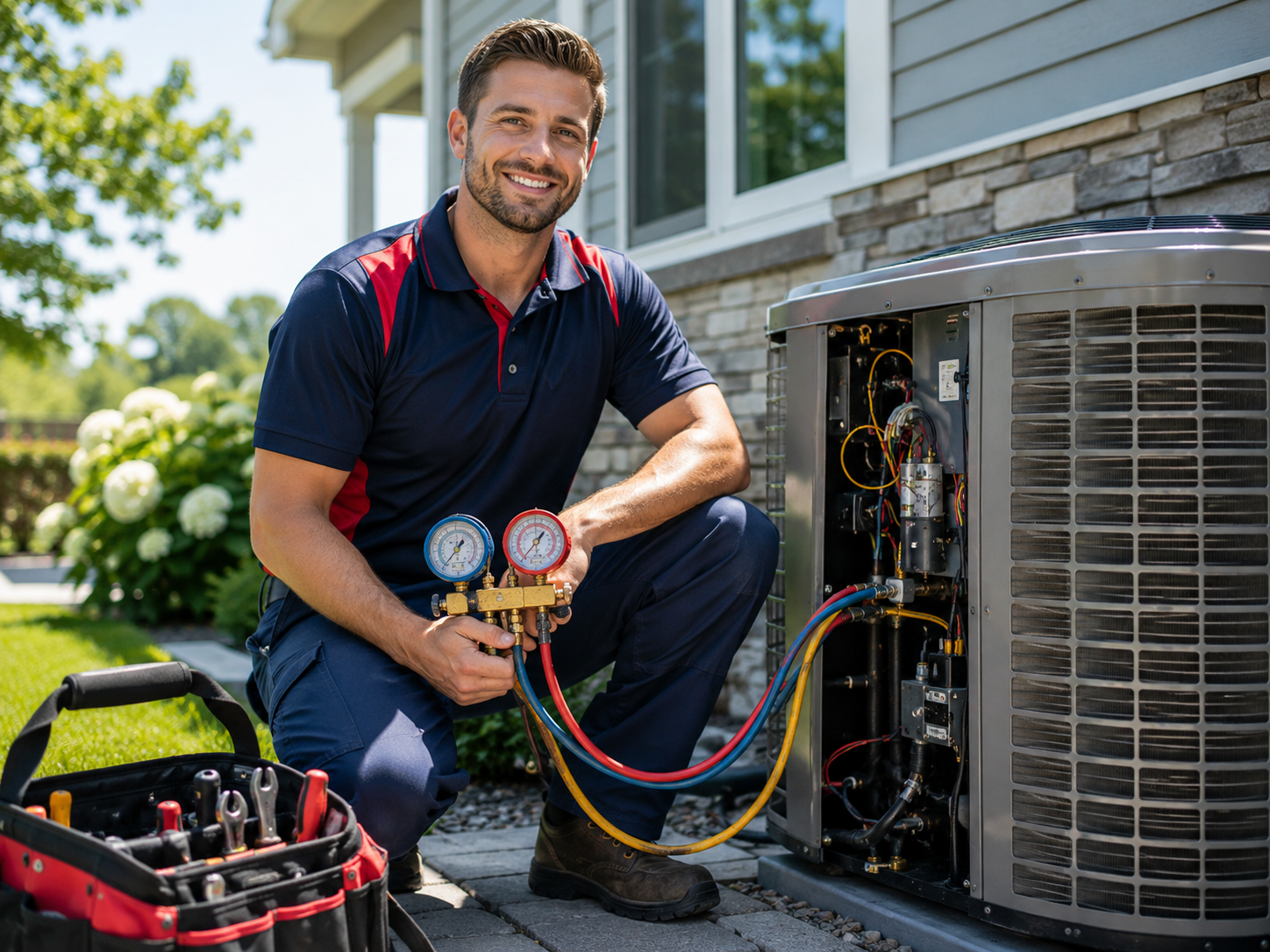
A proper diagnosis starts at the thermostat, confirming it is calling correctly and reading temperature accurately, then moves to the indoor unit to check airflow, the filter and the coil. At the outdoor unit, a technician checks electrical components, refrigerant pressures and the condition of the compressor and fan motor. The goal is to find the actual point of failure before recommending any repair, rather than replacing components based on a guess.
What Happens During an AC Repair Visit?
A technician arrives, asks what the system has been doing, and runs through the diagnostic steps above. Once the cause is identified, you get a clear explanation of what failed, what it will cost to fix, and how it fits into the age and condition of the rest of the system. Work happens after you approve the price — there is no repair performed on spec.
Can My Air Conditioner Be Repaired?
Most AC failures are repairable. Capacitors, contactors, motors, control boards and refrigerant leaks are all serviceable components. The more relevant question is usually whether the repair is worth doing given the system's age and history — a compressor failure on a 16-year-old unit, for example, is technically repairable but often not the better financial decision. When replacement makes more sense, we will say so directly.
What Affects AC Repair Cost?
Repair cost depends on which component failed, whether it needs to be sourced or is on the truck, how accessible the unit is, and whether the failure caused any secondary damage — a seized compressor from long-term low refrigerant, for example, costs more to address than the leak alone. Refrigerant-circuit repairs are generally more involved than electrical component replacements.
Utah Summer Cooling Conditions
Utah County summers push air conditioners hard, with long stretches of 90-degree-plus afternoons that leave little downtime for a struggling system. Equipment that is marginal in spring often fails outright by July, which is why symptoms noticed early in the season are worth addressing before peak demand arrives.
What Affects AC Repair Cost?
Several factors shape the price of an AC repair:
Which component has failed (electrical parts vs. refrigerant circuit vs. compressor)
Whether the part is common and on the truck or needs to be sourced
Age and accessibility of the equipment
Whether the failure caused secondary damage to other components
Refrigerant type and current charge needed
Parley's Advice
If a technician's estimate approaches a significant fraction of a new system's cost, ask us to compare that repair against replacement using the equipment's age and repair history — that comparison usually makes the decision clear.
Work Like This Around Utah County
Typical calls our technicians run from the Orem shop.
Orem
Capacitor failure on a hot afternoon
A common call is a system that hums but will not start, caused by a failed run capacitor at the outdoor unit — a same-visit repair in most cases.
Provo
Refrigerant leak causing warm air
A common call involves a system that runs constantly without cooling, traced to a slow refrigerant leak in the outdoor coil.
Lehi
Frozen evaporator coil from a dirty filter
A common call is ice forming on the indoor coil, resolved by replacing a badly clogged filter and letting the system thaw before restarting.
Why Homeowners Call Parley's
One Orem Location
864 N 1430 W in Orem — the same shop for every job we run in Utah County.
Plumbing + HVAC
Water, heat and air under one roof, which matters when a problem crosses lines.
Diagnose, Then Quote
We find the cause before recommending work, so you are not paying for guesses.
Straight Replacement Talk
When a repair still makes sense we say so, and when it does not we explain why.
AC Repair Throughout Utah County
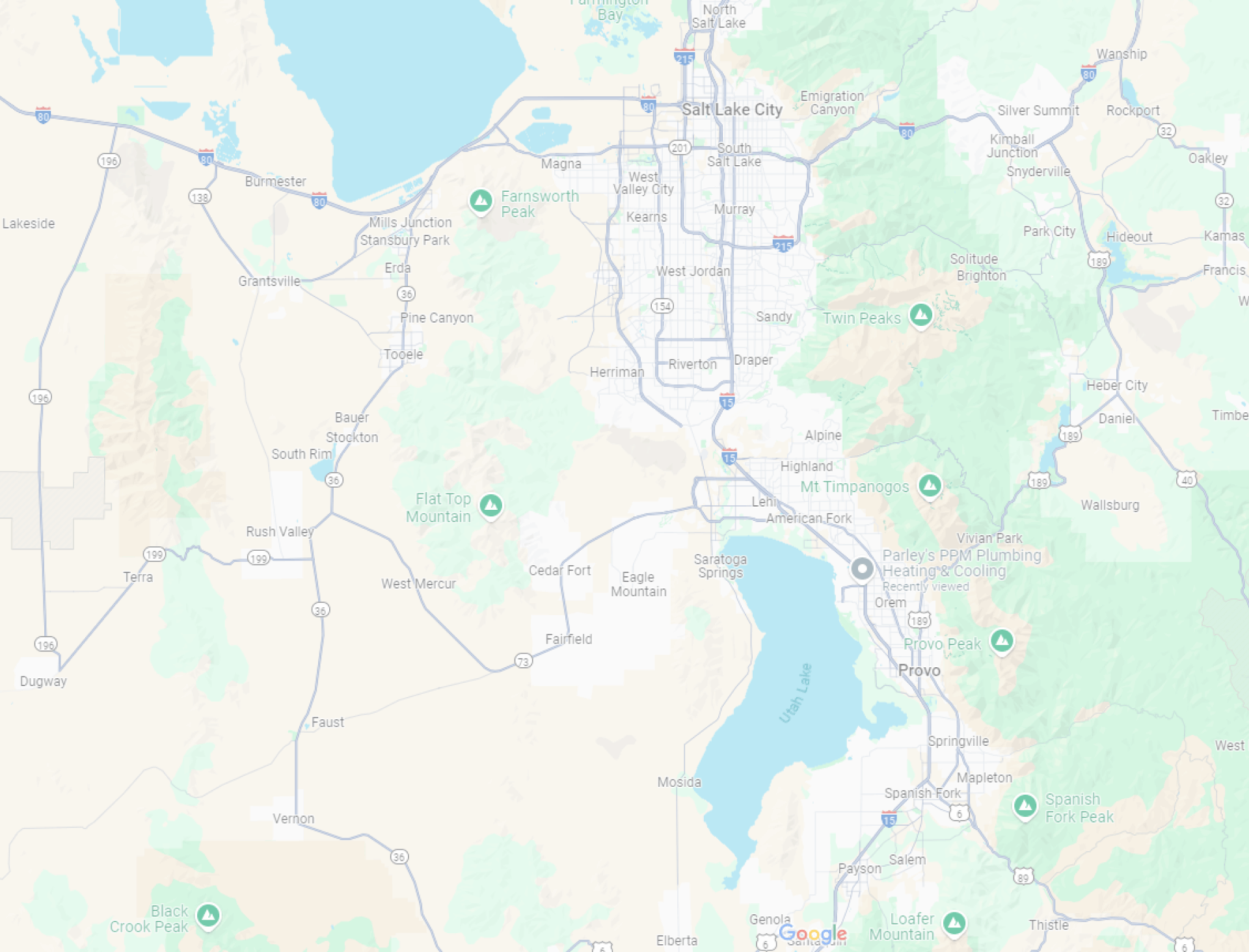
We work from Orem outward, which keeps drive times short across the north end of Utah County and reasonable everywhere else we serve.