What Is a Heat Pump?
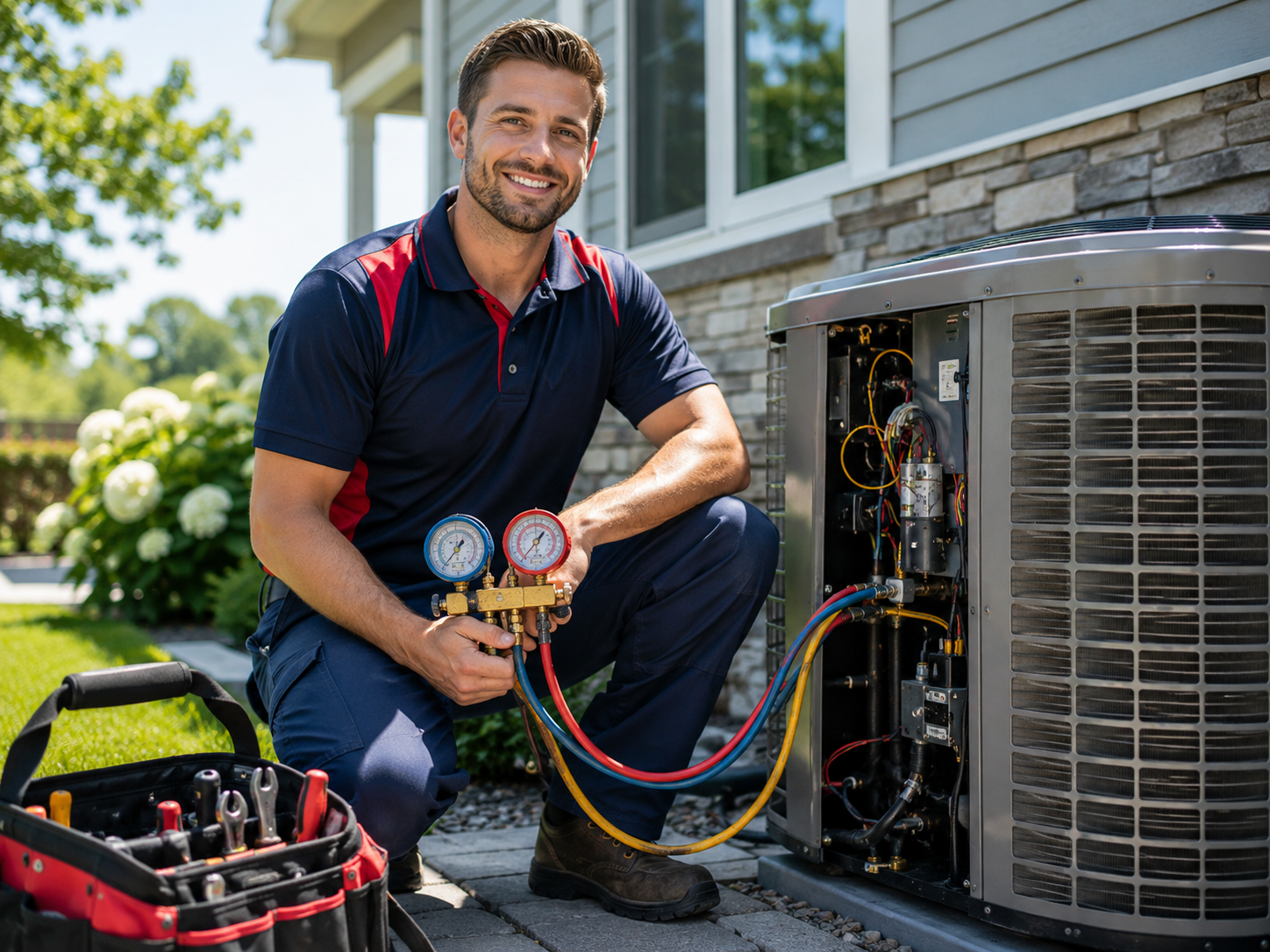
A heat pump is a single outdoor unit that both heats and cools a home by moving heat rather than generating it. In cooling mode it works like a standard air conditioner, removing heat from inside the house. In heating mode it reverses that cycle, pulling available heat from the outside air and moving it indoors, even when the outdoor temperature is cold. Because it handles both jobs, a heat pump replaces the separate furnace-and-AC pairing found in most homes.
Can Heat Pumps Work in Utah?
Yes. Modern cold-climate heat pumps are designed to continue heating effectively well below freezing, using compressor technology that maintains capacity in low temperatures better than older heat pump designs did. Sizing and system design matter more here than in milder climates, since the equipment needs to be selected for Utah County's actual winter lows rather than a generic average. A correctly specified cold-climate heat pump, or a dual-fuel setup, can be a legitimate primary heating source through a Utah winter.
Heat Pump Repair
Heat pump repair covers the same range of issues as central AC — refrigerant circuit problems, failed capacitors or contactors, motor failures, control board issues — plus components specific to heat pump operation, like the reversing valve that switches the system between heating and cooling. A heat pump that cools fine but will not heat, or heats fine but will not cool, often points directly to a reversing valve problem.
Heat Pump Installation
Installing a heat pump follows the same sizing discipline as any properly done AC installation — a load calculation based on the home's insulation, window exposure and layout, not just square footage. For heating-dominant Utah winters, that calculation also needs to account for the home's heat loss at design-day low temperatures, which is part of what determines whether a straight heat pump or a dual-fuel system makes more sense.
Dual-Fuel Heat Pumps
A dual-fuel system pairs a heat pump with a gas furnace, using the heat pump for most heating and cooling and switching to the furnace only when outdoor temperatures drop low enough that gas becomes the more efficient or effective option. This setup gives homeowners the efficiency of a heat pump for the majority of the heating season while keeping a gas furnace's output available for the coldest stretches of Utah winter. It is one of the more practical ways to adopt heat pump technology without fully committing to electric-only heating in a cold climate.
Heat Pump vs. Furnace
A gas furnace only heats and burns fuel to do it. A heat pump both heats and cools and moves heat rather than generating it, which generally makes it more efficient at moderate outdoor temperatures. The tradeoff is that a heat pump's heating capacity naturally decreases as outdoor temperature drops, which is why cold-climate design and dual-fuel backup matter more in a Utah winter than they would in a milder climate.
Heat Pump vs. Central AC
A central air conditioner only cools; a heat pump does that same cooling job plus heating from the same outdoor unit. If you are replacing an aging AC and your furnace is also getting older, a heat pump is worth comparing directly against a straight AC replacement, since it consolidates both systems into one piece of equipment.
How Heat Pumps Are Sized
Sizing a heat pump uses the same load-calculation approach as sizing an air conditioner, with the added step of evaluating the home's heat loss at winter design temperatures. Getting this right matters more with a heat pump than a straight AC, since an undersized unit will struggle to keep up on the coldest days and an oversized one short-cycles in both seasons.
If you're comparing a heat pump against a furnace-and-AC replacement, ask us to run the numbers on a dual-fuel configuration too — it is often the middle option that gets overlooked between an all-gas and all-electric decision.